
BIODIVERSITY RELATED PROJECTS
Sustainable forest management is not just about ensuring future timber supply. SFI’s standards promote many values of forests, such as water purification and delivery, aesthetic and recreational values, and biodiversity. It takes significant biodiversity information resources to balance the management of forests for timber while maintaining the diversity and abundance of the birds, insects, plants and other species that comprise healthy forest ecosystems. SFI both invests in and pursues external resources to form strategic partnerships and projects that advance knowledge to achieve this balance across the forest ecosystems of the U.S. and Canada.
Explore biodiversity projects that SFI has partnered on.
Increasing Sustainable Forest Management Practices that Benefit Focal Bird Species in West Virginia
Principal Investigator:
Greg Cooper
Director Conservation Implementation
Sustainable Forestry Initiative
Research Lead:
Dr. Chris Lituma
West Virginia University
Funded By:
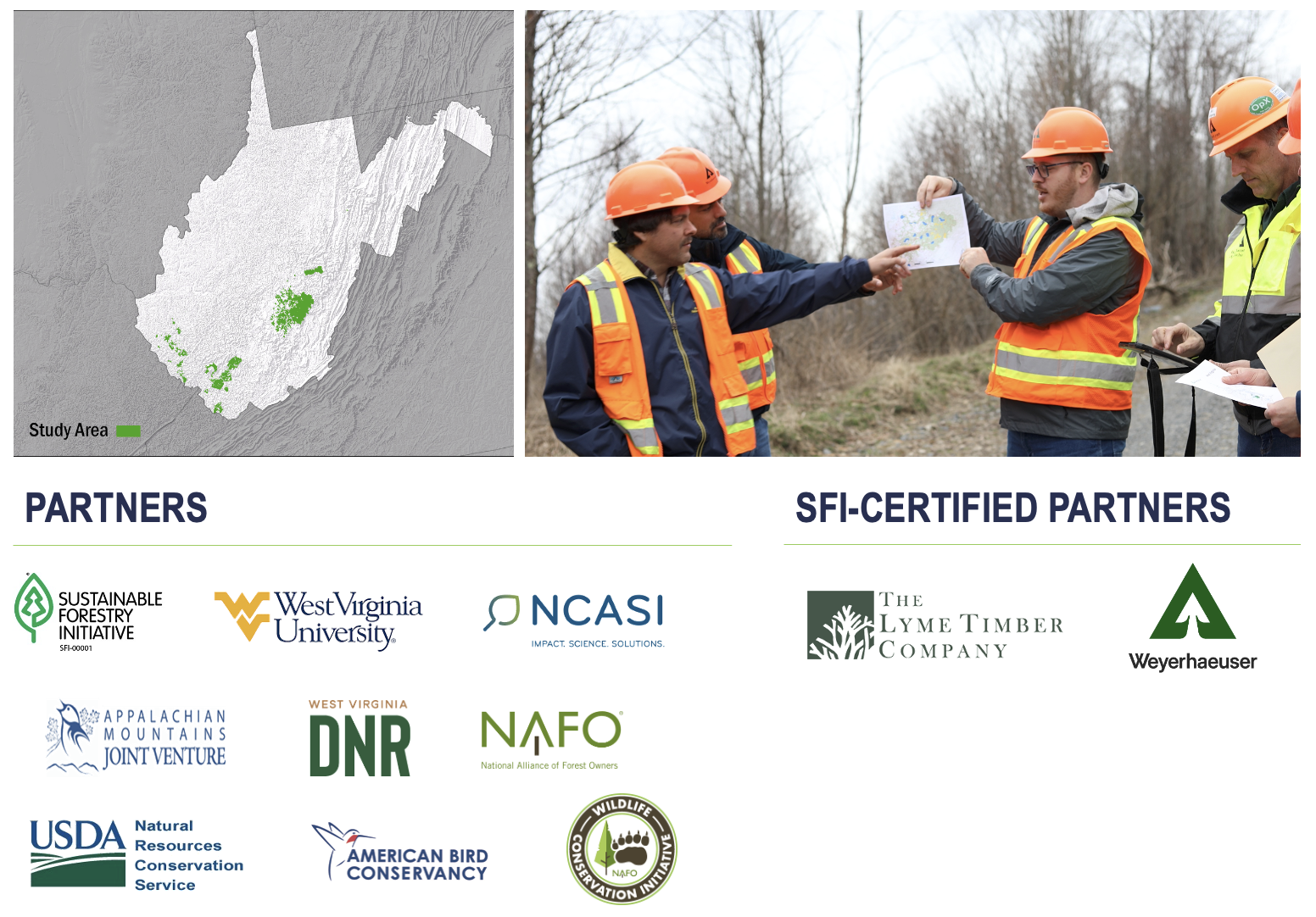
While many forest-dependent bird species are known to be in decline, forest management practices can benefit targeted bird species and help reverse this decline. In the forests of West Virginia, this project uses targeted monitoring to establish the role of early to mid-successional forests for three high priority bird species: the Golden-winged Warbler, Cerulean Warbler, and Wood Thrush. Both field observations and autonomous recording devices are building evidence of habitat preferences on SFI-certified lands and other ownership types across the forest landscape mosaic of West Virginia. The results will produce management guidance for sustainable forest landowners seeking to enhance early and mid-succession forest habitats for the improvement of imperiled bird populations.
Connection to the SFI Forest Management Standard:
Objective 4: Conservation of Biological Diversity
Objective 12: Forestry Research, Science and Training
Objective 13: Community Involvement and Landowner Outreach
Improving Aquatic Habitat Quality on SFI-Certified Forest Lands: Piloting Process and Practice in Coastal Mississippi
Principal Investigator:
Dr. Healy Hamilton
Chief Scientist
Sustainable Forestry Initiative
Funded By:
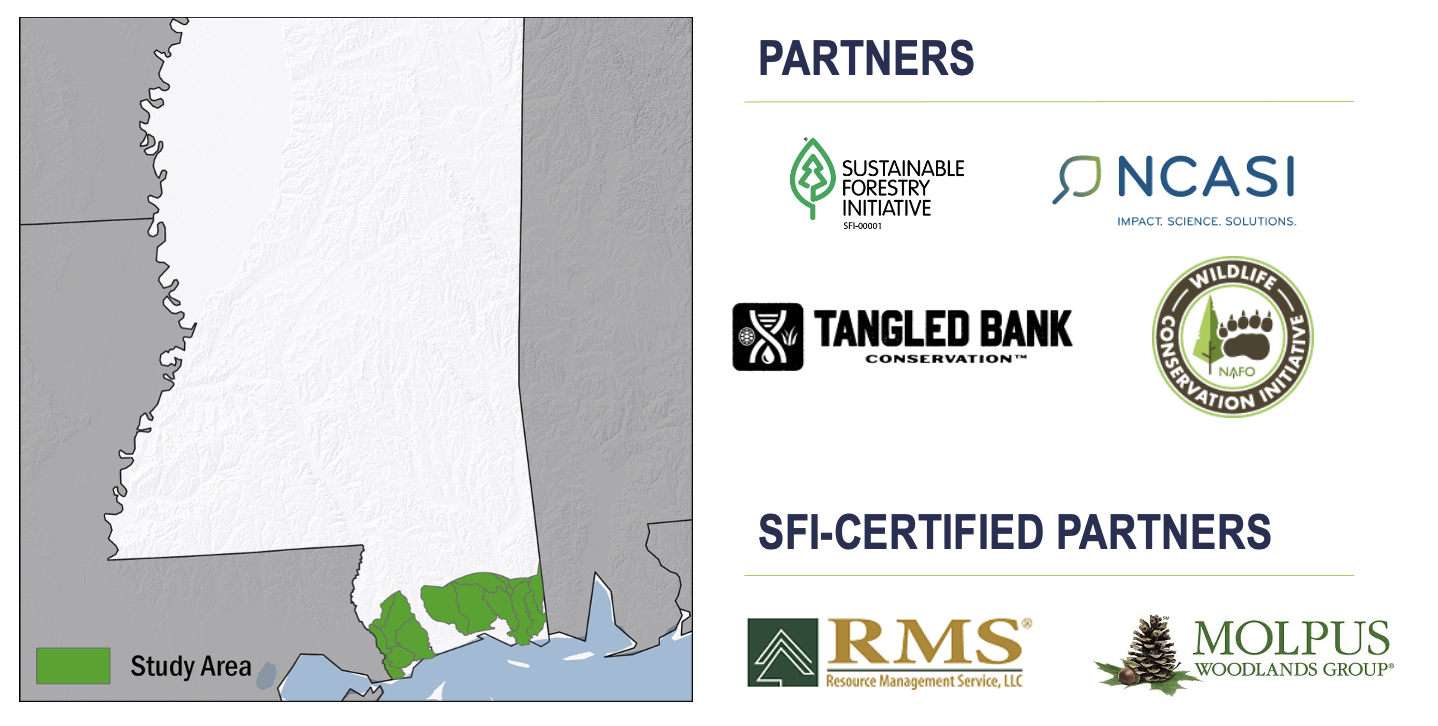
SFI-certified managed forest lands constitute some of the most intact forests fringing the coast of Mississippi. These coastal forests are crisscrossed by waterways containing diverse freshwater species that flow directly into the Gulf. Using the latest approaches in nature tech and data science, this project will analyze eDNA and other biodiversity indicators of aquatic ecosystem health for rivers and streams on forestlands managed by two SFI-certified organizations. Measuring across nearly 100 sites, the different types and abundance of small aquatic organisms will provide a window into the health of these riparian systems. Initial results in Year 1 will inform current approaches to aquatic habitat remediation underway as part of forestry operations. With these sensitive biotic measures, resampling all sites in Year 3 will establish if and how aquatic habitat condition is changing over time. Lessons learned will connect specific aquatic habitat management action in forestry operations to the ecological health of the waterways flowing through coastal MS forests and into the Gulf.
Connection to the SFI Forest Management Standard:
Objective 3: Protection of Water Resources
Objective 4: Conservation of Biological Diversity
Remote-Sensing Based Fire Risk and Benefit Assessments for Imperiled Species’ Habitats and Ecosystems
Principal Investigator:
Dr. Volker Radeloff
Professor
University of Wisconsin-Madison
Funded By:

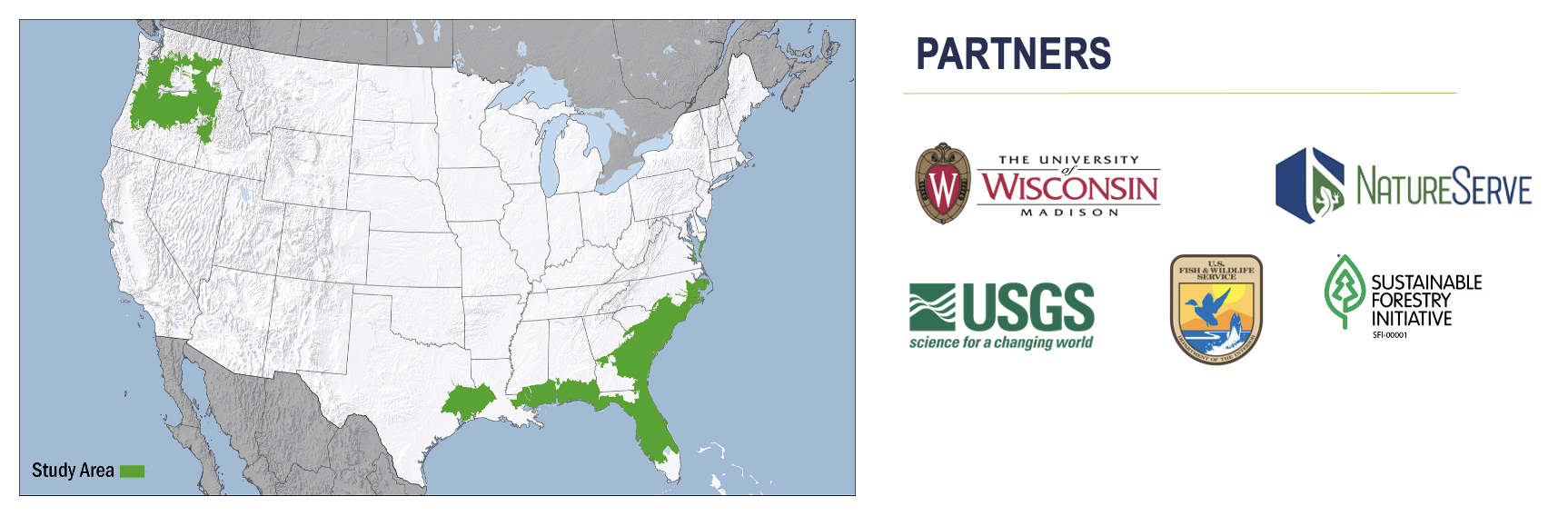
Fire in forests is both an agent of destruction and of regeneration, including for the many imperiled species that occur in fire-adapted habitats that have experienced a century or more of fire surpression. In working forests, adaptive forest management practices that selectively include fire can benefit both forests and the threatened species that respond positively to the influence of fire. In this NASA-funded project that brings together scientists from academia, federal agencies, conservation NGOs and SFI, the team will generate new national maps of fire hazard, severity, and recovery. These fire metrics will provide critical information for vulnerability assessments of two major U.S. forest ecosystems– long leaf pine in the southeast and the interior Pacific Northwest forests. The outputs of these assessments provide spatially-explicit information on a range of factors contributing to vulnerability and resilience for these forest ecosystems and the imperiled species they harbor.
Connection to the SFI Forest Management Standard:
Objective 4: Conservation of Biological Diversity
Objective 10: Fire Resilience and Awareness
Developing a Model For Cross-Boundary, Landscape-Scale Stewardship of Older Forests in the US Pacific Northwest
Principal Investigator:
Dr. Lauren T. Cooper
Chief Conserviation Officer
Sustainable Forestry Initiative
Funded By:

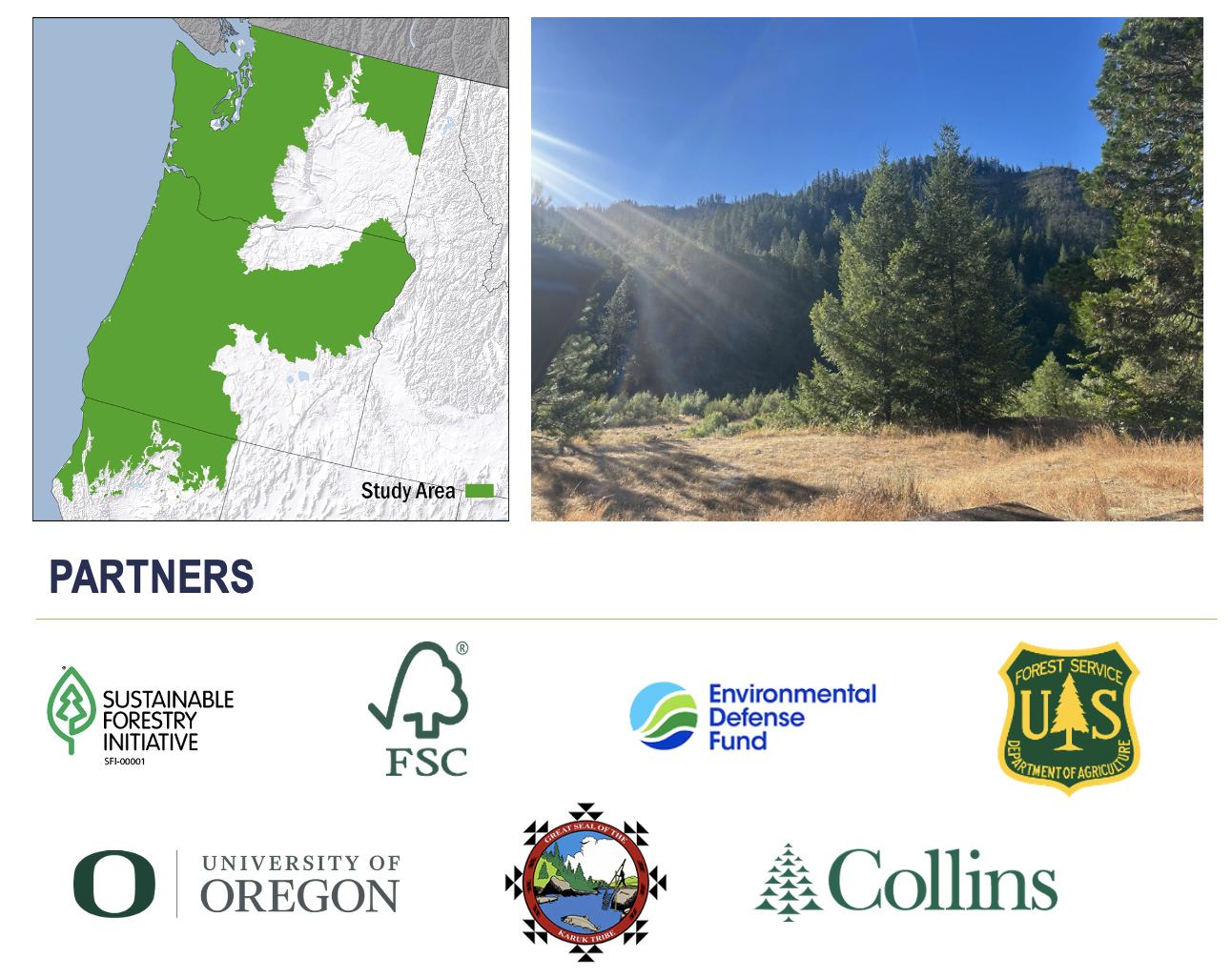
The Western Klamath Restoration Partnership (WKRP) has built a model of multistakeholder stewardship for over 1M acres in the heart of Pacific Northwest forests, which includes bringing indigenous fire practices to U.S. national forest lands. How can this successful model be scaled up, and what is the role for large private sector forest landowners? Throughout this region, the scale of the need for active forest management is daunting, particularly to reduce fire risk to rural communities. How best to balance with the need to nurture ecologically valuable late-stage successional forests? To rise to this challenge, SFI partnered with FSC-US to conduct a multistakeholder workshop that brought together organizations certified to one or both standard with WKRP members to learn about the WKRP model and consider how it can inform their fire risk reduction and older forest management considerations. Additional workshops are planned with a focus on nurturing older forest condition through ecological stewardship, rural and market development, and innovative financial incentives.
Connection to the SFI Forest Management Standard:
Objective 4: Conservation of Biological Diversity
Bats as Critical Components of Sustainable Forestry: Changing Forest Management and Harvest Practices in British Columbia
Principal Investigator:
Dr. Cori Lausen
Director of Bat Conservation
Wildlife Conservation Society of Canada
Funded By:
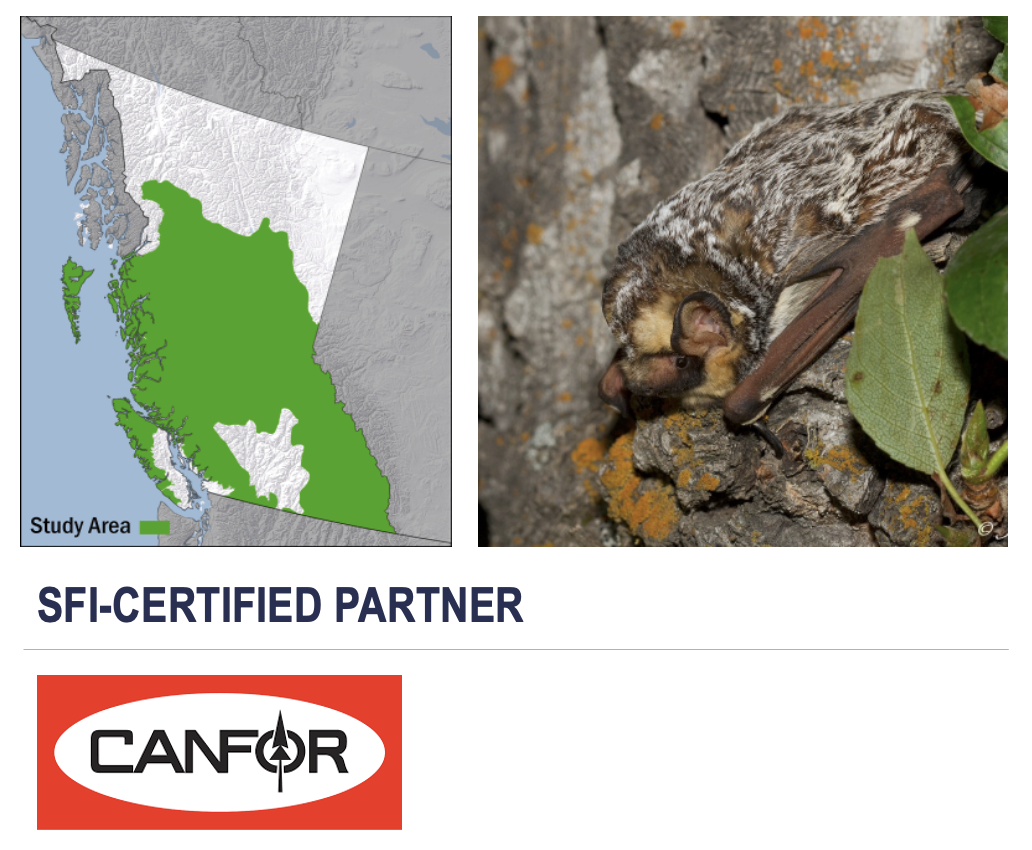
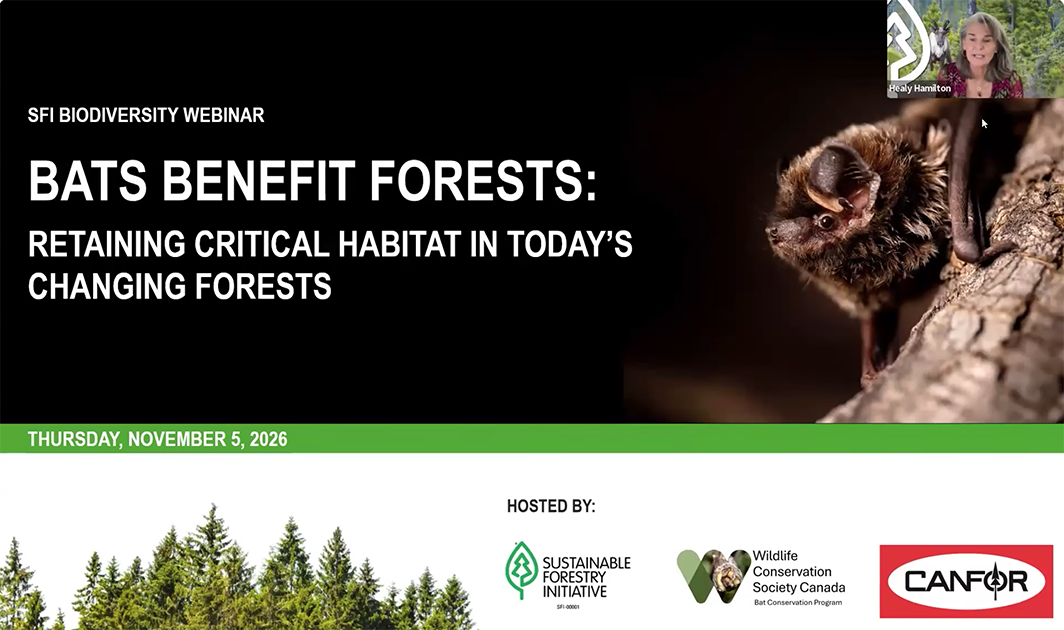
Bats are critical species in maintaining forest ecosystem health, especially in western Canada’s forests where they are important predators for many of the insect species, such as bark beetles, that can pose significant threats to forest health when severe outbreaks occur. The unique biology of these flying mammals poses challenges to conservation of healthy, reproducing bat communities in managed forests. Species experts from WCS Canada are seeking to work with private forestry and government agencies to develop comprehensive best forest management practices for bats. SFI has helped to seed an initial effort, together with Canfor, who hosted WCS bat scientists for a field-based workshop and in-person educational trainings for their staff. WCS scientists are developing initial guidance for approaches to restore and retain high bat biodiversity in working forests, and SFI is sharing it widely – see the highly informative Nov 2026 webinar recording where you can learn to think like a forest bat!
Connection to the SFI Forest Management Standard:
Objective 4: Conservation of Biological Diversity
Objective 13: Training and Education
SFI CONSERVATION IMPACT
SFI CONSERVATION RESEARCH
CLIMATE SMART FORESTRY
BIODIVERSITY AT SFI
SFI CONSERVATION GRANTS
Comments or Questions? Contact:
or visit our staff page for team members


